
Tree Pruning
Pruned Right.
Grows Right.
Tree pruning done properly encourages healthy growth, improves structure and reduces long-term risk. All work carried out to BS 3998 standard by NPTC qualified arborists, fully insured to £10 million.
Pruning is one of the most important things you can do for a tree, and one of the easiest to get wrong. Poor cuts, wrong timing, removing too much or too little: all of these put a tree under stress and can accelerate decline. We prune to a standard that gives the tree the best chance of recovering cleanly and growing well.
All our pruning work follows BS 3998, the British Standard for tree work. That means cuts are made to the correct position at a suitable lateral branch or growing point, no stubs, no flush cuts, no tearing. The tree can compartmentalise correctly and close over the wound in time.
Types of Pruning We Carry Out
- Formative pruning: establishing good structure on young trees before problems develop
- Crown lifting: removing lower branches to increase clearance beneath the canopy
- Crown thinning: selective removal of internal branches to improve light and airflow
- Crown cleaning: removing dead, diseased, crossing or rubbing branches
- Fruit tree pruning: winter and summer pruning to improve cropping and shape
- Vista pruning: targeted removal to open up specific sightlines or views
- Amenity pruning: regular maintenance to keep trees healthy and well-presented
When Should You Prune?
Timing depends on the species. Most deciduous trees are best pruned in late autumn or winter when they're dormant: wounds close faster and disease risk is lower. Some species, like cherry and plum, are better pruned in summer to reduce the risk of silver leaf fungus. We'll advise on the right timing for your specific tree before any work starts.
“A good prune now saves a difficult job later. We'd rather help customers get ahead of a problem than show up after it's escalated.”
Jack, Founder, I Am Lumberjack
At a Glance
- Standard
- BS 3998, the British Standard for Tree Work
- Qualification
- NPTC certified arborists on every job
- Includes
- Formative, crown lifting, thinning, cleaning, fruit trees
- TPO trees
- We check restrictions and advise before work begins
- Insurance
- £10 million public liability, documentation on request
On the day
What to expect.
- 01
We turn up when we said
Then walk the job with you before anything is cut. Between March and August we check every tree for nesting birds first.
- 02
Qualified, insured crew
NPTC-qualified arborists, £10 million public liability insurance, documents sent beforehand if you want them.
- 03
A full clean-up is standard
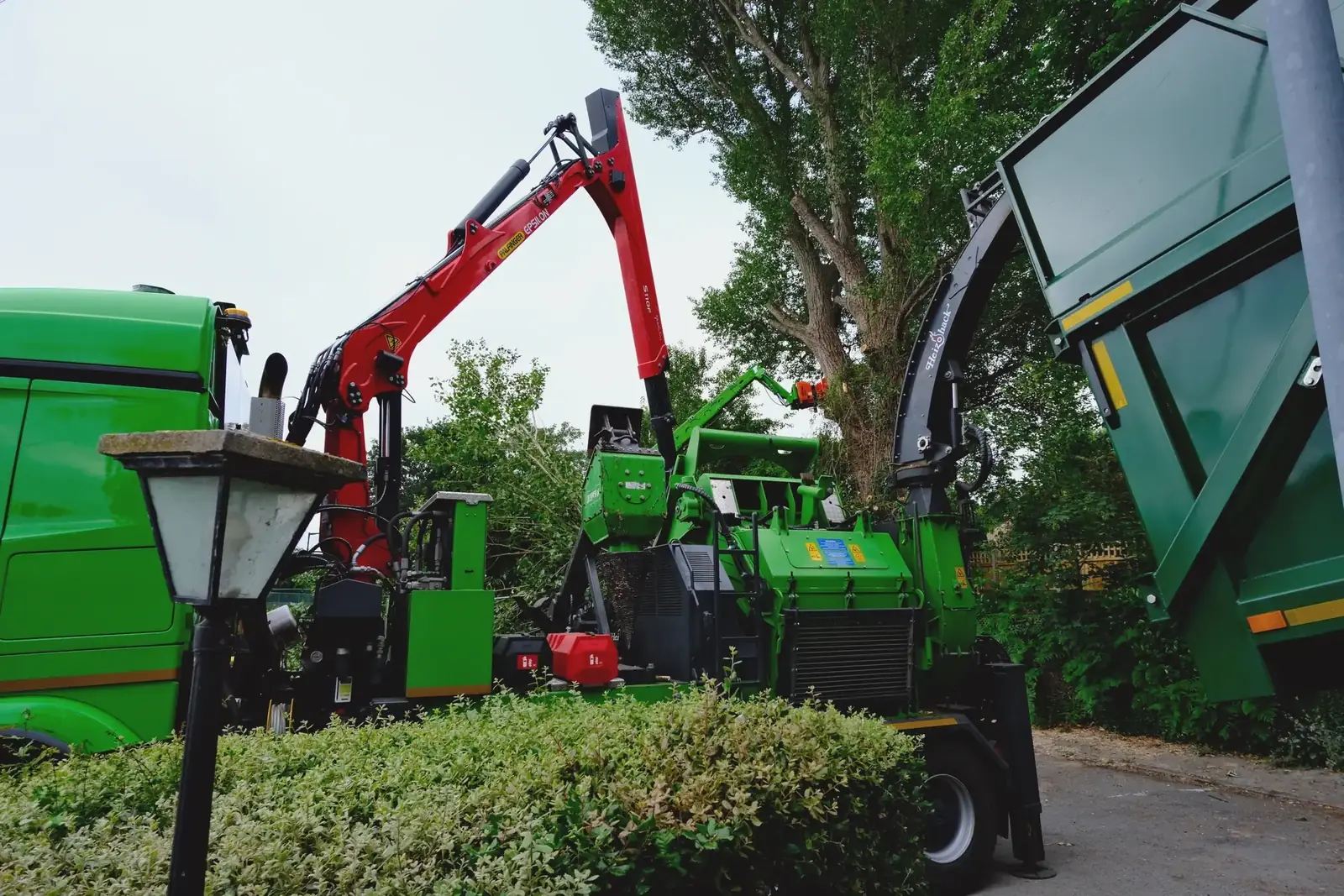
Green waste is chipped on site and taken away. We are a registered waste carrier.
- 04
Keep the wood if you like
Timber can be cut into logs and left for you, or taken away. Keep your tree →
Cost
What the price depends on.
- The size and number of trees
- How much needs cutting back
- Access to the tree and for clearing the cuttings
- Any TPO or Conservation Area notice needed
Every quote is free, written and itemised, with no obligation to go ahead.
Our guide to tree surgery costs →“Punctual, knowledgeable and friendly. They left the garden spotless.”
When is the best time to prune trees?
For most deciduous trees, while they're dormant: roughly November to February. Some species have their own windows, and nesting season means a check is needed between March and August. If you're unsure about a specific tree, ask us and we'll give you a straight answer. Read the full guide
My neighbour's tree is overhanging my garden. What can I do?
You can cut back branches and roots to the boundary line, but not beyond it, and the cuttings should be offered back to your neighbour. We can prune to the boundary on your side; anything more needs your neighbour's permission. If the tree has a TPO, the same consent rules apply whichever side you're on.
Can you cut trees during nesting season?
Yes, with care. Under the Wildlife and Countryside Act 1981 it's an offence to damage or destroy an active bird's nest. Between March and August we check every tree for nests before starting. If we find one, we'll advise delaying that part of the job until the nest is no longer in use. Many jobs go ahead without any issue. Best time to prune trees
Free Quote