
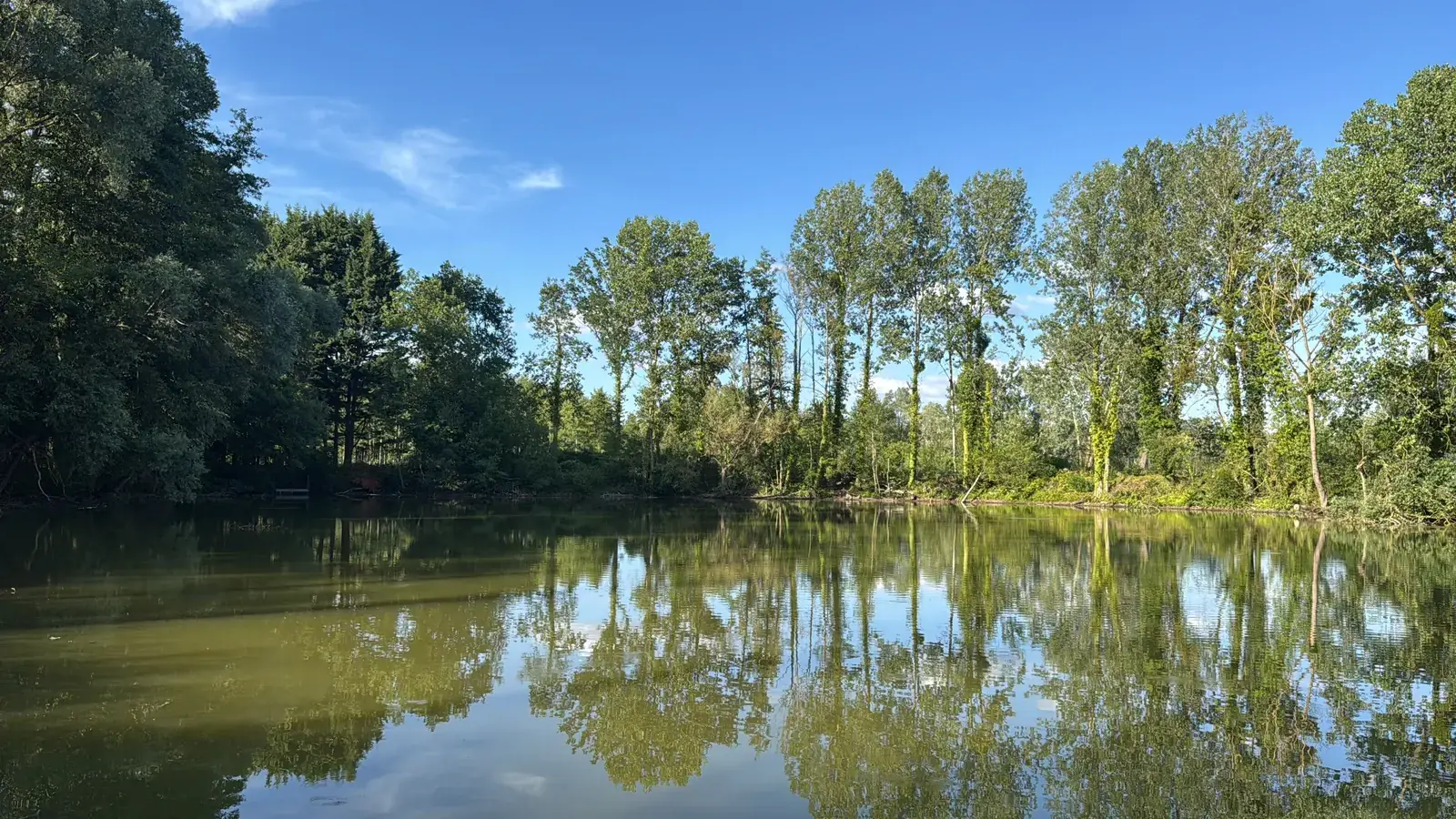
Emergency Response · Soupir, Aisne, France
Storm Damage.
Next Day.
Soupir, France.
We typically head out to Soupir in the off-season: scheduled tree work and site maintenance on the fishing lakes managed by our property development partner, ATPB. June wasn't in the plan. Then the storms hit.
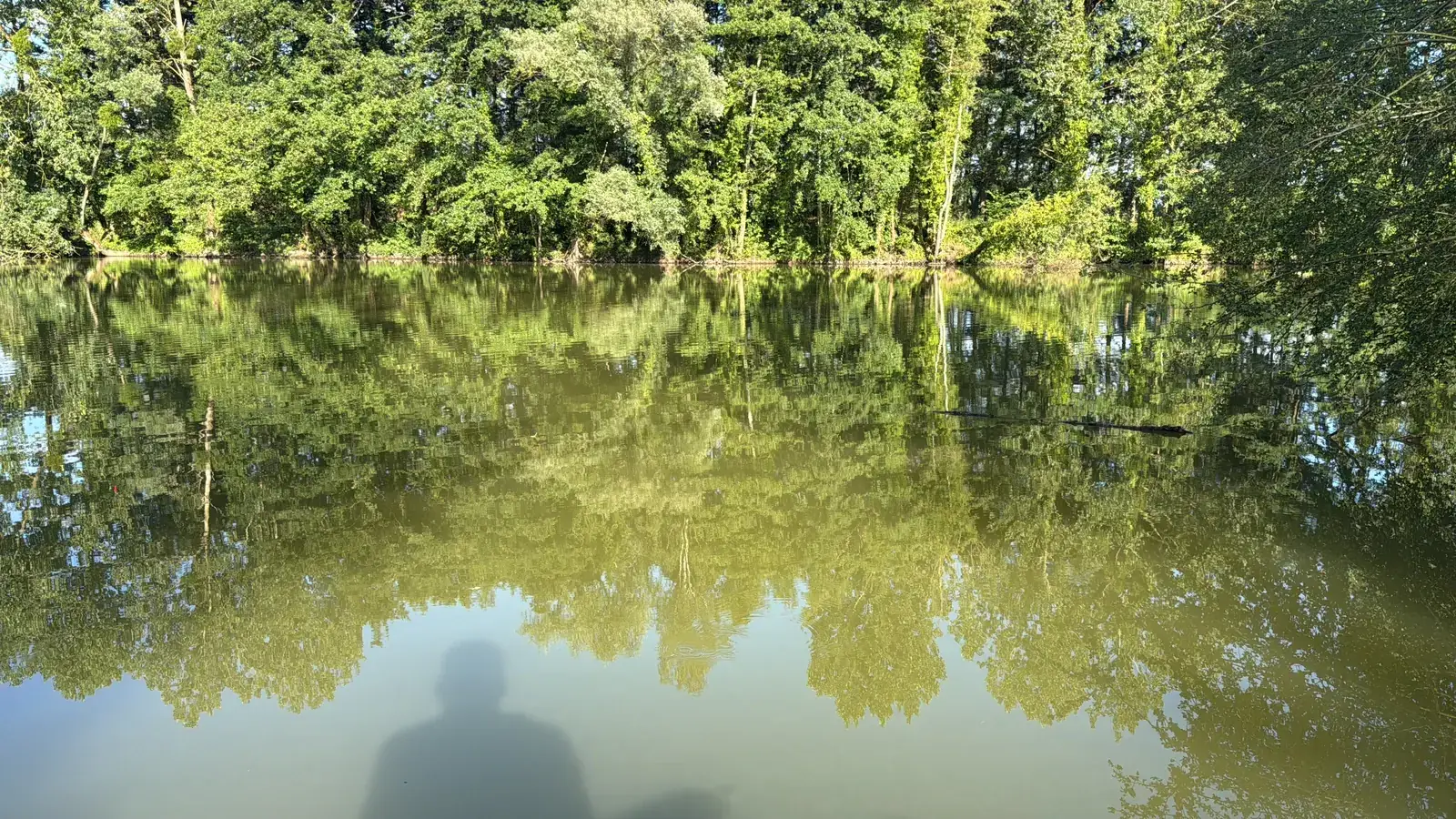
A series of severe storms swept through northern France, causing widespread tree damage across the Aisne region. The ATPB fishing complex at Soupir (a working commercial fishing destination with lakes, access tracks and a significant tree stock) took a serious hit. Trees down on vehicles, across fencing, into the lake margins. The site needed to be assessed and made safe before anglers could return for the remainder of the season.
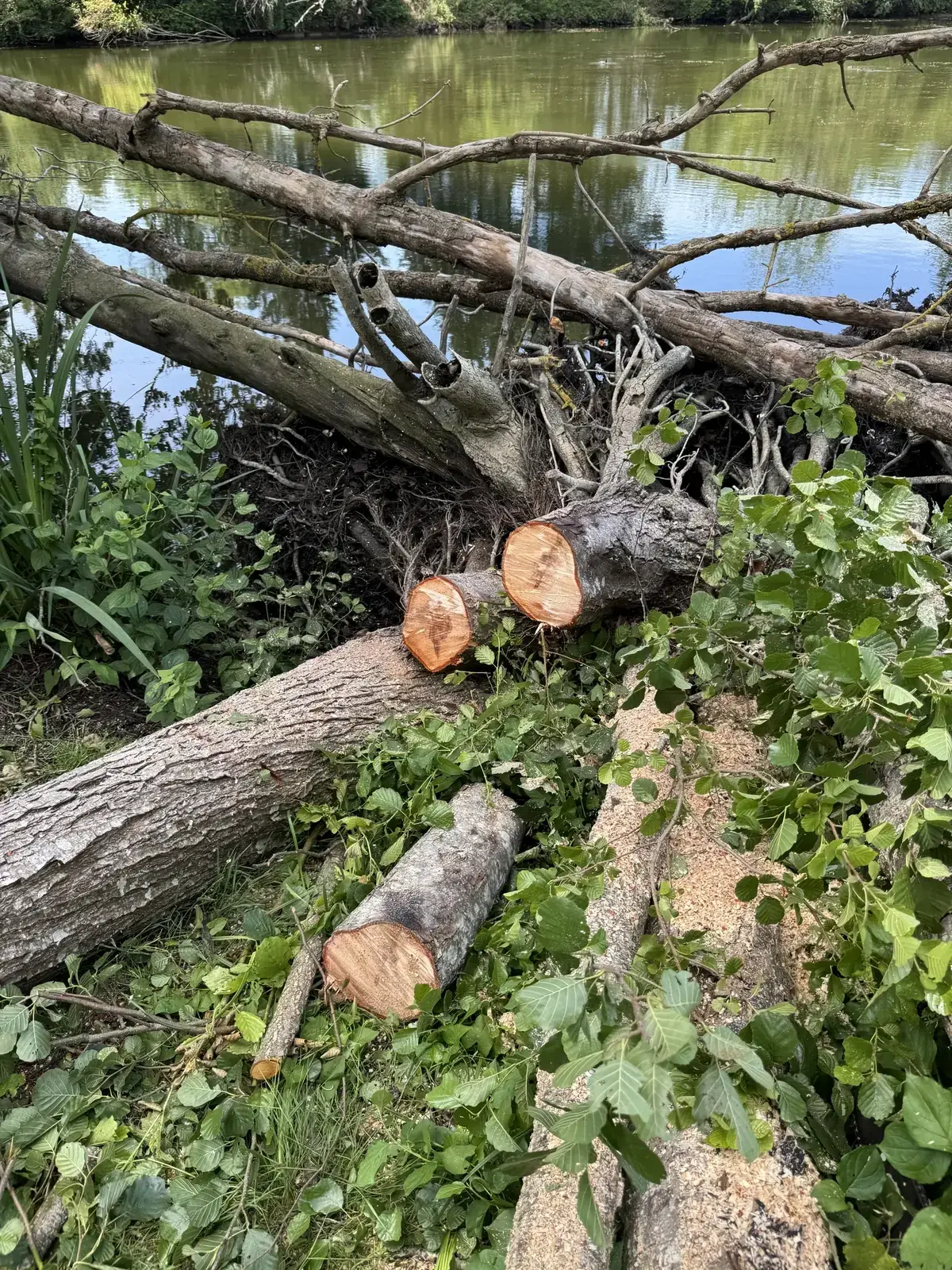
We were on a flight the next morning. The brief was straightforward: assess the full extent of the damage, prioritise hazards, and get the site back to a usable, safe condition as quickly as possible. In practice, that meant working across multiple areas simultaneously: clearing access tracks, dealing with hung-up trees, cutting back material that had fallen into the water, and making structural assessments on trees that hadn't fully failed but were compromised.
What the Storms Left Behind
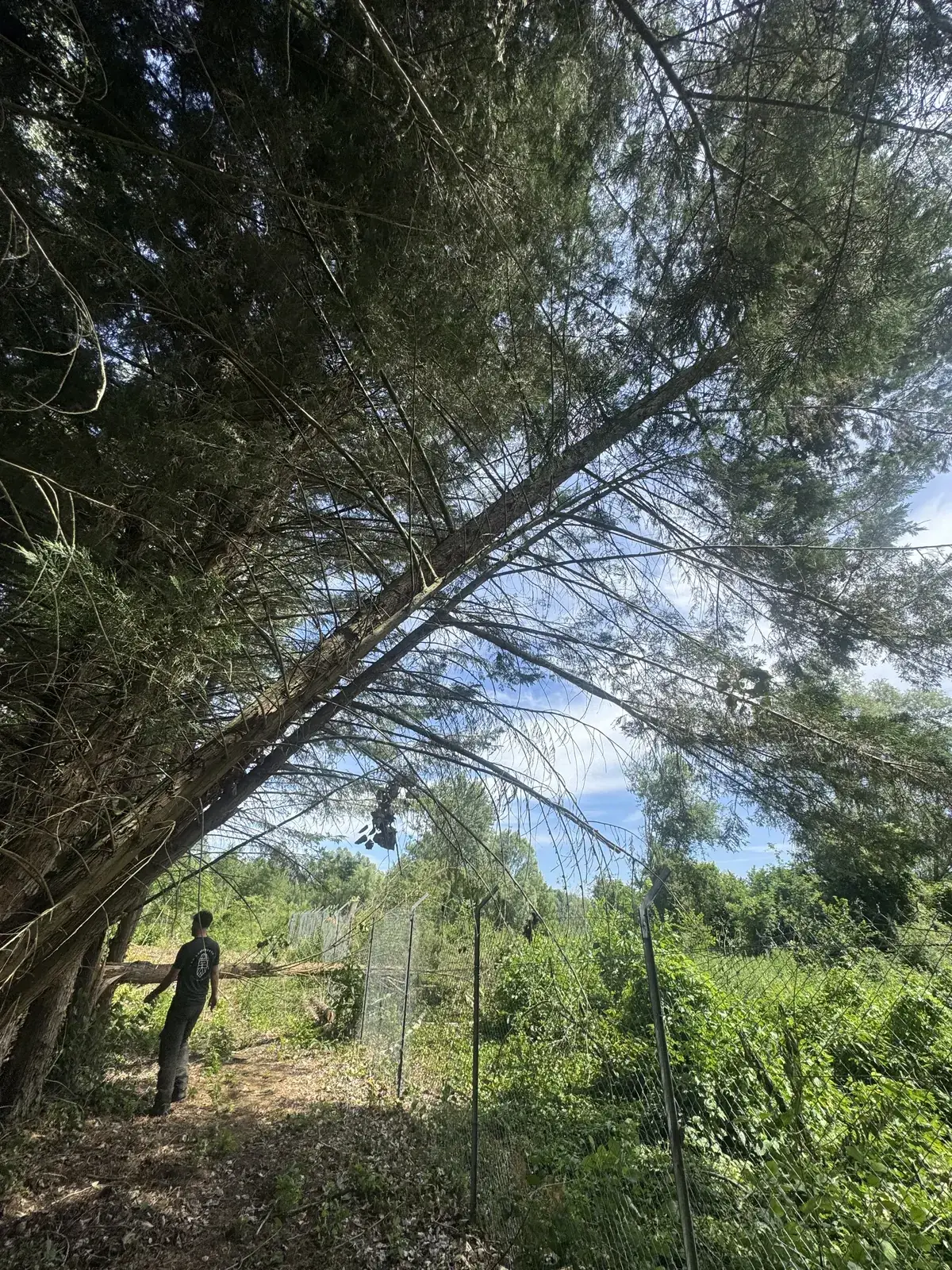
The damage was significant and varied. A large tree had come down directly onto a vehicle on the main access track: a complete failure at the base, not a limb shed. Several mature trees along the lake margins had partially failed, leaving heavy hanging sections suspended above the water and the fishing pegs. A line of conifers had been pushed to extreme angles by the wind, with root plates partially lifted. Perimeter fencing had taken multiple impacts from falling timber.
The priority was any immediate risk to people: hung-up material over access routes and fishing areas first, followed by anything that had fallen into or near the water. Once the site was safe to move through, we worked systematically through each affected zone.
Working Quickly Without Cutting Corners
Emergency response abroad presents a specific set of logistical challenges. You're working without your full kit, in a different language environment, often without the access to chippers, grapples or machinery you'd have at home. Everything has to be done by hand or with what's available on site.
What doesn't change is the approach. Rigging, controlled felling sequences, working from the hazard outward: the discipline is the same whether you're in Sidcup or the Aisne. By the end of the trip, all immediate hazards had been cleared, the access tracks were open, and the lake margins were safe for the fishing season to continue.
“ATPB called us because they trust us to react fast and do it properly. Getting on a plane the next day is just part of what the relationship means. The lakes were back open within 48 hours of us landing.”
Jack, Founder, I Am Lumberjack
Project Details
- Location
- Soupir, Aisne, France
- Client
- ATPB: Property Development Partners
- Type
- Emergency storm damage response
- Mobilisation
- Next-day flight from London
- Duration
- 2 days on site
- Services
- Hazard assessment, hung-up tree removal, margin clearance, access restoration
- Outcome
- Site fully reopened for fishing season
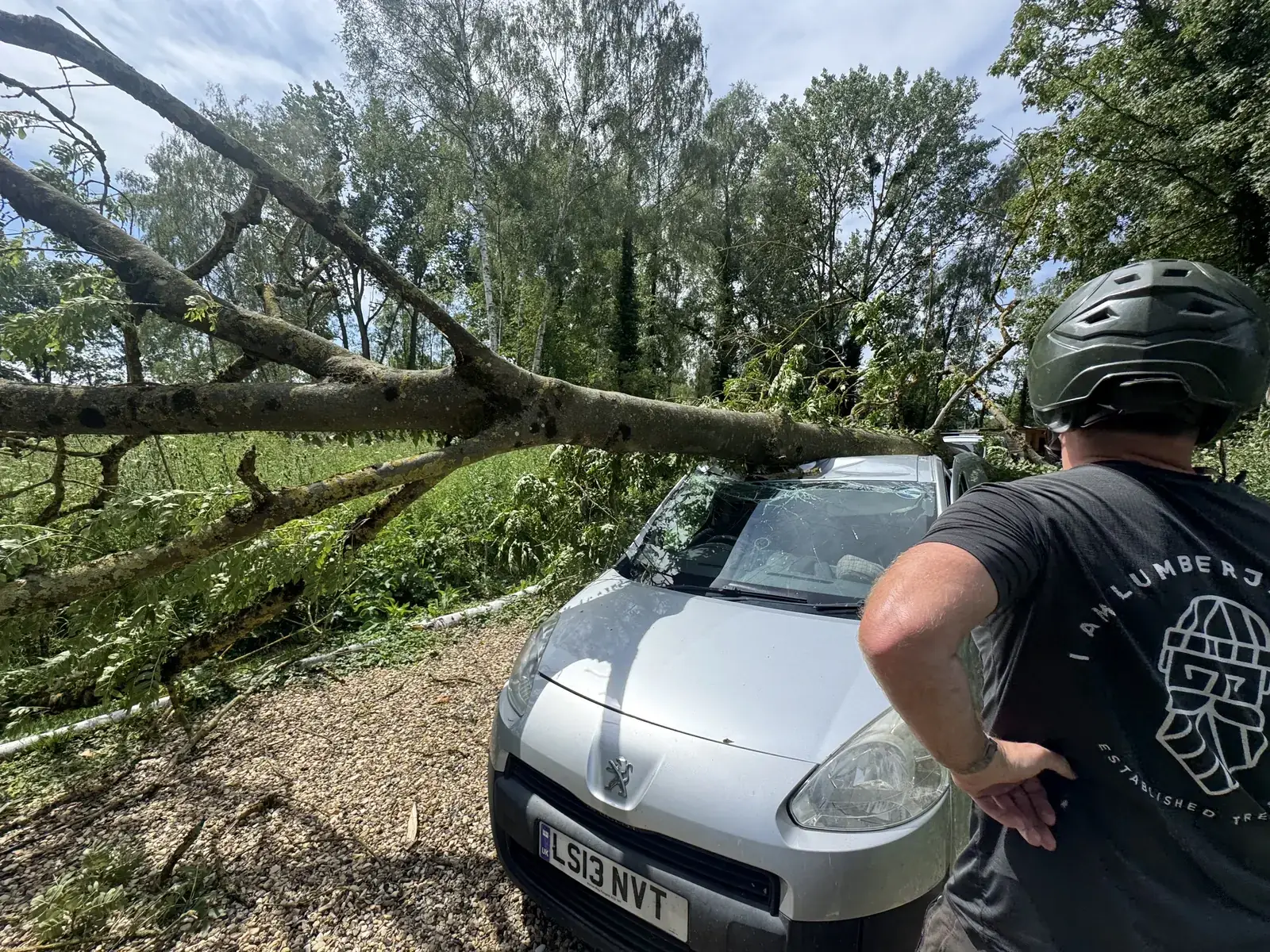
Storm damage
Tree down on vehicle: access track, Soupir
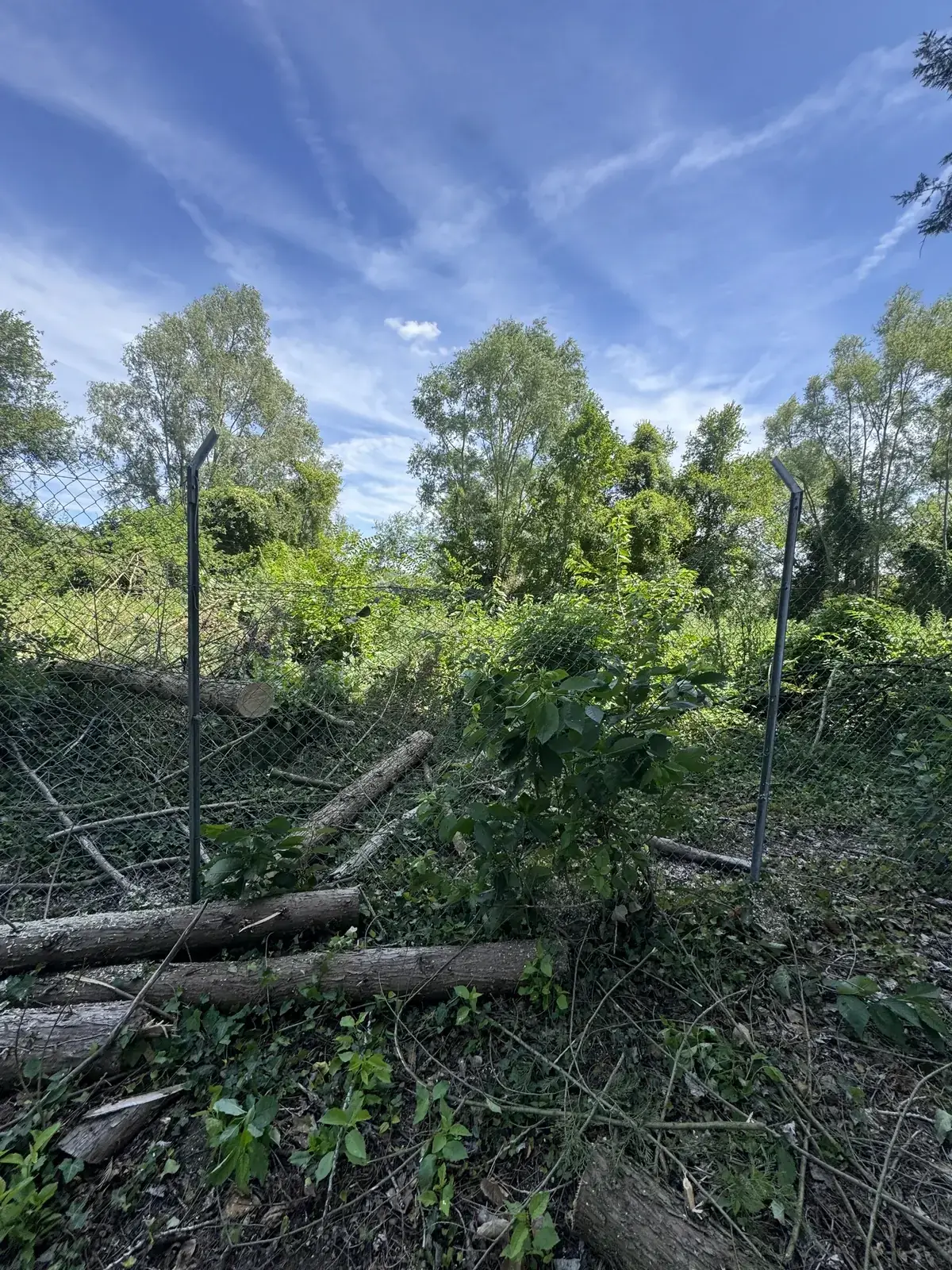
Site perimeter
Multiple tree failures through fencing
Assessment
Storm-compromised conifer: partial root plate failure
Lake margin clearance
Fallen timber sectioned and cleared from the water's edge
Emergency Tree Work
Storm damage doesn't wait for business hours. We respond to emergency callouts across Kent, South East London and, when the situation requires it, further afield. If you have a site that's been hit, call us.