Deadwooding
Dead Wood
Down Safely.
Dead branches are a safety hazard and a sign the tree needs attention. We remove dead, dying and structurally compromised wood to reduce risk and improve the long-term health of your trees. NPTC qualified arborists, fully insured to £10 million.
Deadwood is a natural part of any tree's life cycle, but when dead branches are large, over footpaths, roads or buildings, or when a tree is shedding significant deadwood, it becomes a risk that needs managing. Deadwooding is the process of removing those branches before they become a problem.
Done correctly, deadwooding doesn't harm the tree. Dead branches are removed at the right point to leave a clean stub that allows the tree to compartmentalise properly. It also opens up the canopy slightly, improving airflow and reducing the conditions that allow fungal diseases to take hold.
Why Deadwood Needs to Come Down
- Dead branches can fall without warning, especially in wind or after rain
- Deadwood is a target for fungal infection that can spread to healthy wood
- Falling limbs cause injury, vehicle damage and property claims
- Local authorities can issue notices requiring deadwooding on highway trees
- Insurance policies may exclude damage caused by known deadwood hazards
- Regular deadwooding extends the life of otherwise healthy trees
What the Work Involves
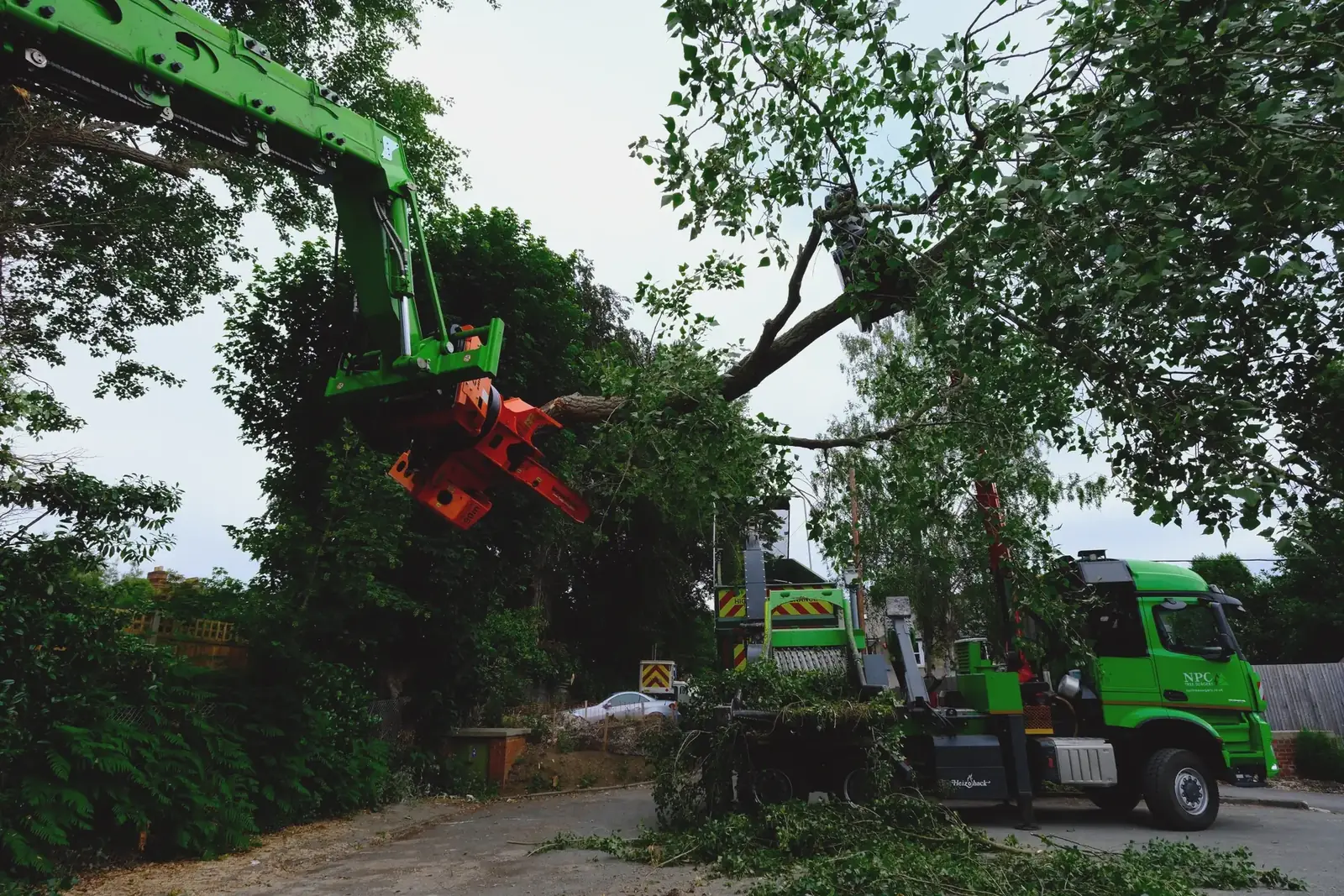
Our arborists climb to inspect and remove all significant deadwood from the canopy. On larger trees or where access is restricted, we use rigging techniques to lower branches safely rather than dropping them. Every job ends with site clearance. We leave nothing behind.
For commercial clients and estate managers, we can provide a written report following a deadwooding inspection, documenting what was found, what was removed, and any recommendations for further work or monitoring.
“Deadwood is one of those things that's easy to ignore until it lands on something. We'd always rather be called early.”
Jack, Founder, I Am Lumberjack
At a Glance
- Standard
- BS 3998, the British Standard for Tree Work
- Qualification
- NPTC certified arborists on every job
- Includes
- Dead, dying, structurally compromised and rubbing branches
- Reports
- Written inspection reports available for commercial clients
- Insurance
- £10 million public liability, documentation on request
On the day
What to expect.
- 01
We turn up when we said
Then walk the job with you before anything is cut. Between March and August we check every tree for nesting birds first.
- 02
Qualified, insured crew
NPTC-qualified arborists, £10 million public liability insurance, documents sent beforehand if you want them.
- 03
A full clean-up is standard
Green waste is chipped on site and taken away. We are a registered waste carrier.
- 04
Keep the wood if you like
Timber can be cut into logs and left for you, or taken away. Keep your tree →
Cost
What the price depends on.
- The size of the tree and how much dead wood there is
- Access for the climbers
- Whether the tree has a TPO or is in a Conservation Area
Every quote is free, written and itemised, with no obligation to go ahead.
Our guide to tree surgery costs →“Punctual, knowledgeable and friendly. They left the garden spotless.”
Can you cut trees during nesting season?
Yes, with care. Under the Wildlife and Countryside Act 1981 it's an offence to damage or destroy an active bird's nest. Between March and August we check every tree for nests before starting. If we find one, we'll advise delaying that part of the job until the nest is no longer in use. Many jobs go ahead without any issue. Best time to prune trees
When is the best time to prune trees?
For most deciduous trees, while they're dormant: roughly November to February. Some species have their own windows, and nesting season means a check is needed between March and August. If you're unsure about a specific tree, ask us and we'll give you a straight answer. Read the full guide
Are you fully insured?
Yes, £10 million public liability. We'll send the documents before any work begins if you'd like them.
Free Quote