Crown Reduction & Pruning
Smaller Tree.
Same Shape.
Healthier Too.
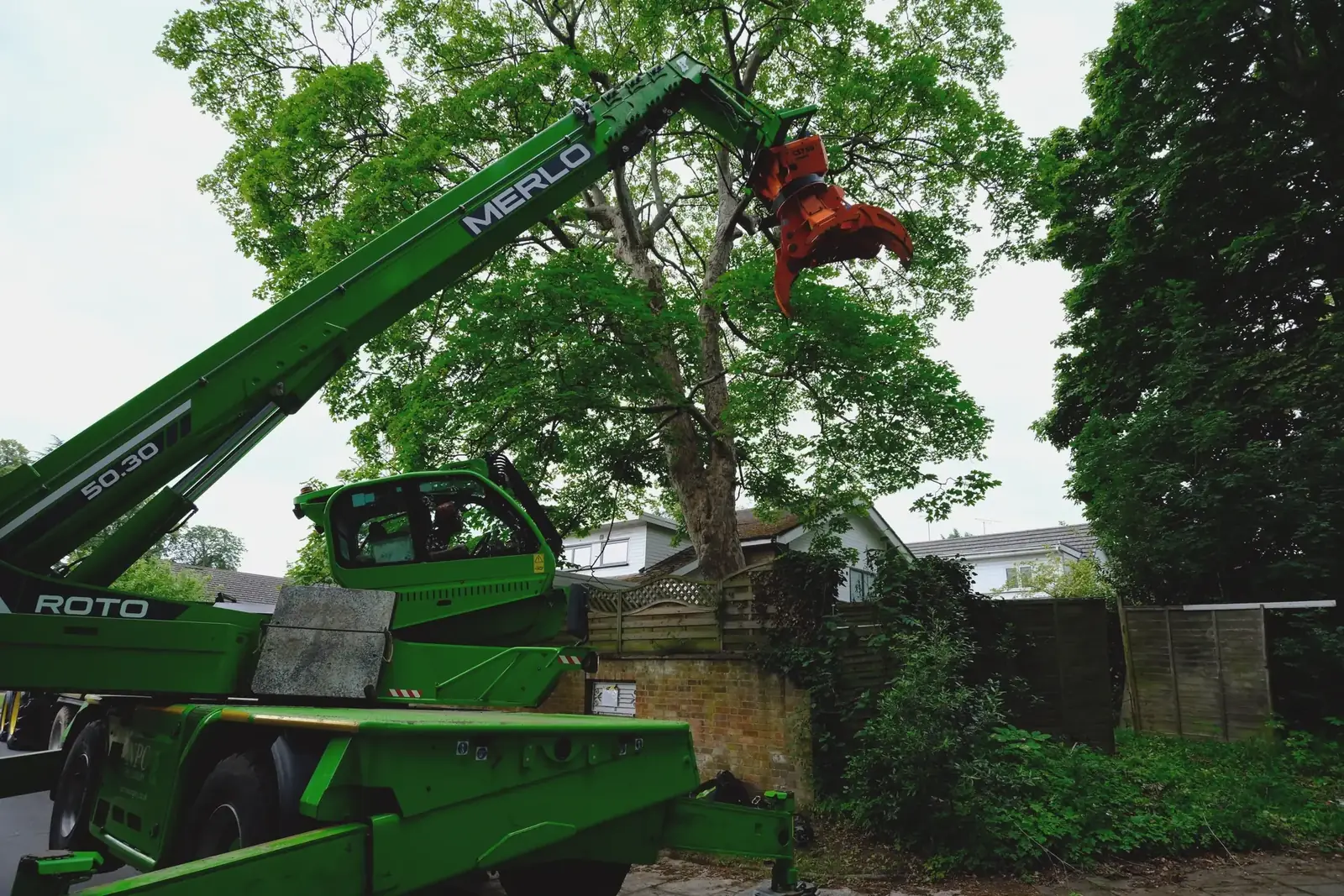
Crown reduction reduces the overall size of a tree's canopy while retaining its natural form and structural integrity. All work carried out to BS 3998 standard by NPTC qualified arborists, fully insured to £10 million.
Crown reduction is one of the most commonly misunderstood tree operations. Done properly, it reduces the height and spread of a tree by cutting back branches to suitable growing points, leaving the tree looking natural and structurally sound. Done badly, it leaves a stubbed, stressed tree that struggles to recover.
We follow BS 3998 (the British Standard for tree work) on every pruning job. That means no flush cuts, no stubs, no topping: only reductions to suitable lateral branches that allow the tree to compartmentalise correctly and regrow in a controlled way.
Crown Reduction vs Crown Thinning
These are different operations and not interchangeable. Crown reduction reduces the overall size (height and spread) of the canopy. Crown thinning removes selected branches from within the canopy to increase light and airflow without changing the tree's overall dimensions. We'll advise which is appropriate for your tree and your goals.
When Is Crown Reduction the Right Call?
- Tree has outgrown its space and is encroaching on a building or boundary
- Overhanging branches are shading a garden, patio, or neighbouring property
- Tree was previously topped or badly pruned and needs corrective work
- Structural work required to reduce wind resistance and risk of failure
- Tree is subject to a TPO but removal permission is unlikely to be granted
- Owner wants to retain the tree but manage its size long-term
What We Also Offer
Beyond reduction, our pruning services include crown lifting (removing lower branches to increase clearance beneath the canopy), deadwooding (removing dead, dying or dangerous branches), and formative pruning for younger trees to establish good structure from early on.
“A well-executed crown reduction should be barely noticeable from the street a year later. The tree grows back into the cuts and the result looks natural: that's the standard we aim for.”
Jack, Founder, I Am Lumberjack
At a Glance
- Standard
- BS 3998, the British Standard for Tree Work
- Qualification
- NPTC certified arborists on every job
- Includes
- Crown reduction, thinning, lifting, deadwooding, formative pruning
- TPO trees
- We check restrictions and advise before work begins
- Insurance
- £10 million public liability, documentation on request
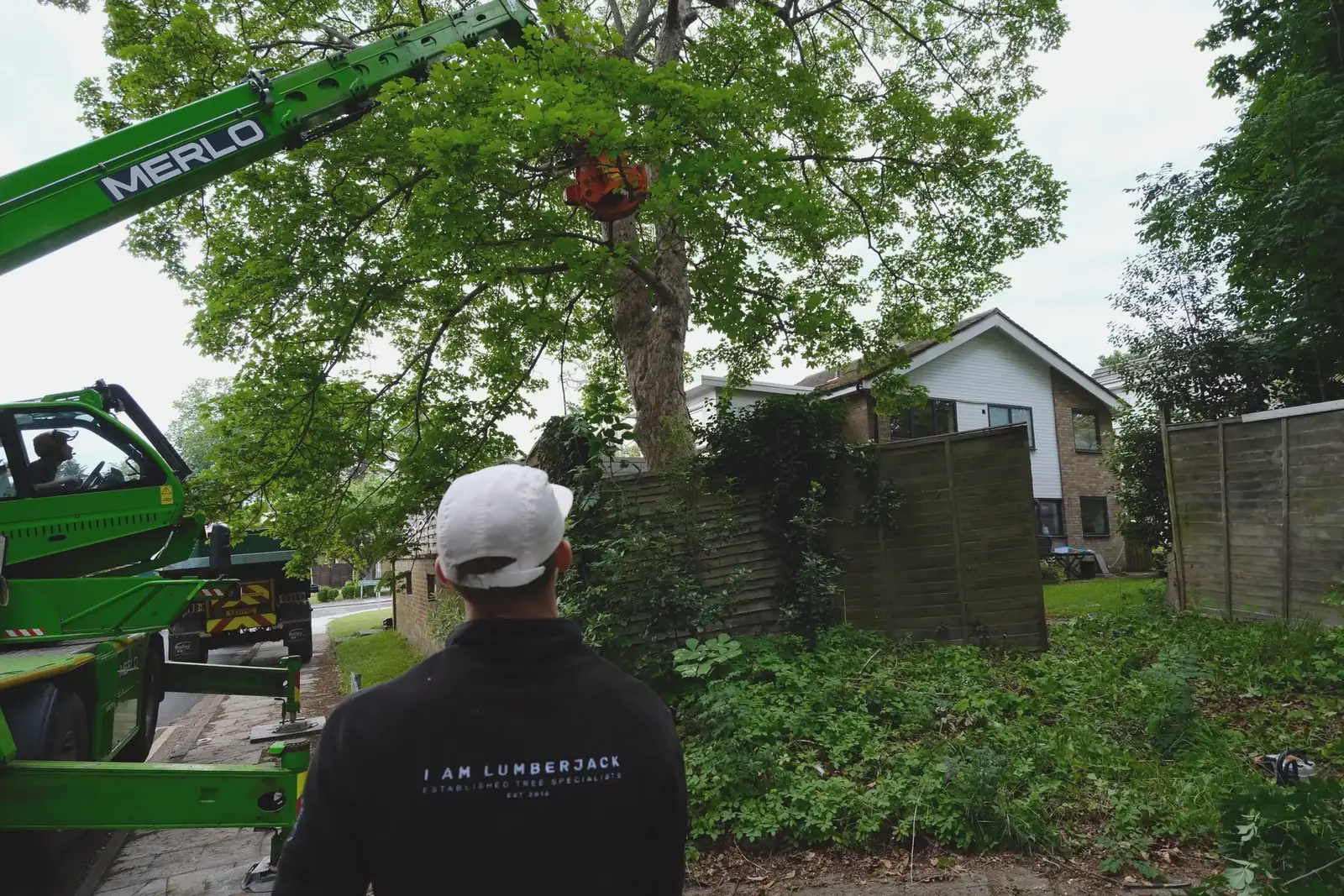
On the day
What to expect.
- 01
We turn up when we said
Then walk the job with you before anything is cut. Between March and August we check every tree for nesting birds first.
- 02
Qualified, insured crew
NPTC-qualified arborists, £10 million public liability insurance, documents sent beforehand if you want them.
- 03
A full clean-up is standard
Green waste is chipped on site and taken away. We are a registered waste carrier.
- 04
Keep the wood if you like
Timber can be cut into logs and left for you, or taken away. Keep your tree →
Cost
What the price depends on.
- The size and species of the tree
- How much it needs reducing
- Access for the climbers and for clearing the cuttings
- Whether the tree has a TPO or is in a Conservation Area
Every quote is free, written and itemised, with no obligation to go ahead.
Our guide to tree surgery costs →“The work is always carried out as discussed to an excellent standard and the area left clean and tidy.”
What is crown reduction?
Cutting back the tips of branches to suitable growing points to reduce a tree's height or spread while keeping its natural shape. It's very different from topping, which removes the main growing tip and is bad practice. Crown reduction
When is the best time to prune trees?
For most deciduous trees, while they're dormant: roughly November to February. Some species have their own windows, and nesting season means a check is needed between March and August. If you're unsure about a specific tree, ask us and we'll give you a straight answer. Read the full guide
What is a Tree Preservation Order (TPO)?
A legal protection the council places on a specific tree, group of trees or woodland. It's an offence to prune, fell or damage a TPO tree without the council's written consent. We can check whether your tree is protected and handle the application for you. Check for TPOs at your address
Free Quote